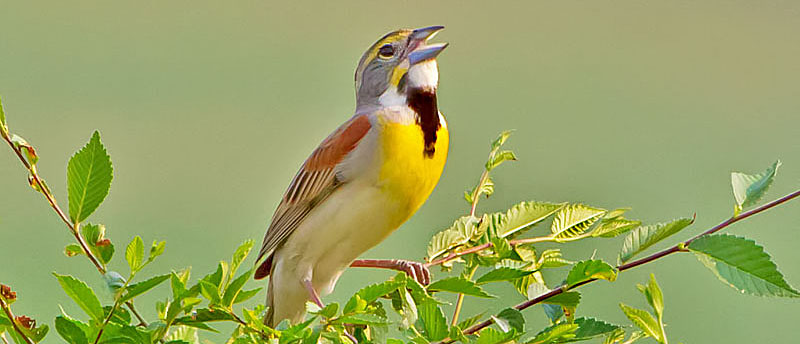
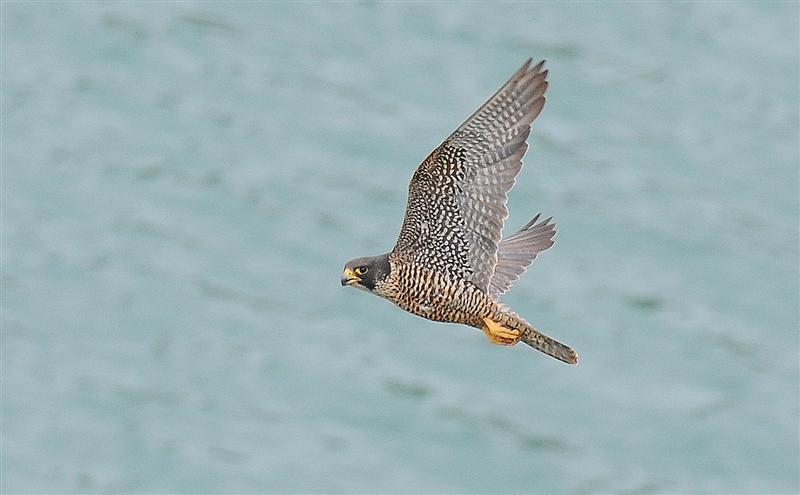
I met up with Matthew Olear down in Harpers Ferry the morning of Saturday, March 2 to show him where the peregrine(s) has been sighted here in town. He has been very involved in local (DC area) peregrine-watching for a number of years and is keen on discovering if there is a new local pair nesting in the Harpers Ferry vicinity. Some of you may know the recent history of peregrines in our area. Apparently, since 1883 Maryland Heights has been consistently documented as hosting peregrine nests – and up until 1952 these have been successful. Recent attempts to re-introduce the peregrine have not been completely fruitful.
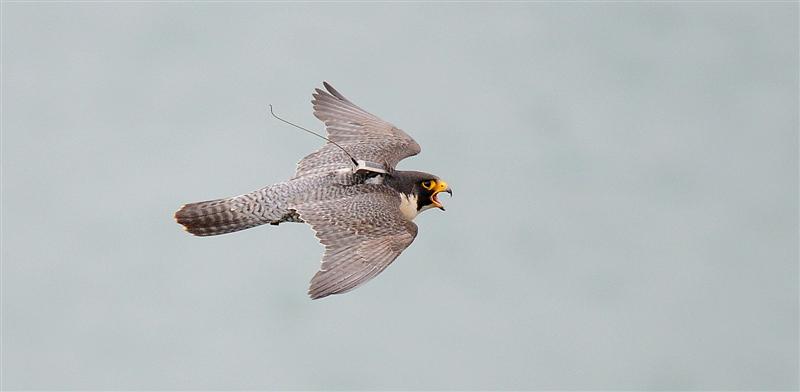
In the meantime, please keep me in the loop or post online about any peregrine sightings you may have in the Jefferson County/Harpers Ferry area. I plan on keeping Mr. Olear informed…. Thanks!
From Mr. Olear: “If there is indeed a peregrine pair near Harpers Ferry, this is an exciting – and usually advantageous – time to see them. This time of year they should be engaged in courtship and nest selection, so some of the things you might see are food delivery/sharing (typically male bringing food to female), ledge displays with bowing and vocalizing, the male performing acrobatic flights and trying to entice the female by flying from ledge to ledge (or possibly in and out of one particular ledge), and copulation. In some cases certain pairs are more demonstrative and easier to view than others, but if there is a territorial pair there these are some of the things we would hope to see, along with aggressive behavior toward other raptors (with the female typically being most aggressive).”
Regarding WV Peregrines: “Shawn Padgett and his colleagues at William & Mary’s Center for Conservation Biology (CCB) collaborated with the National Park Service and others on a multi-year project to hack peregrines in the New River Gorge. One of the males they fitted with a satellite transmitter and released during the 2007 season showed up at Harpers Ferry and spent much of his time in that area over the ensuing year or so. I was lucky enough to spot him on MD Heights back in March 2008.
We were hopeful he would attract a mate and nest at HF, but over the next two years I never caught more than a glimpse of the falcon despite the fact that his transmitter signals continued to show he was in that area. I checked all the various rock faces, the bridges – no luck. Finally in spring 2010 one of Shawn’s colleagues did a little digging and discovered Millville quarry. The quarry is located about 5 miles southwest of Harper’s Ferry as the crow flies. I went there with one of the CCB’s antennas and sure enough, their released male was nesting on an old quarried rock face with an unbanded female.
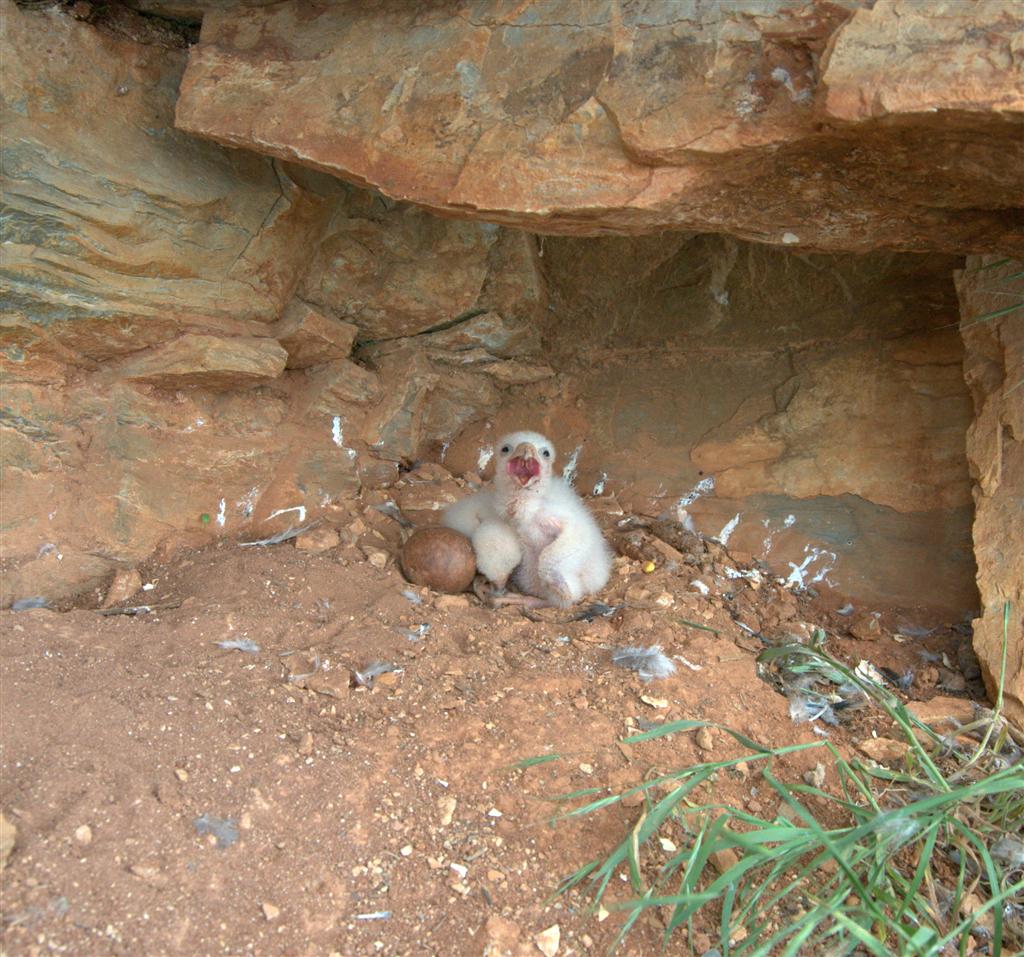
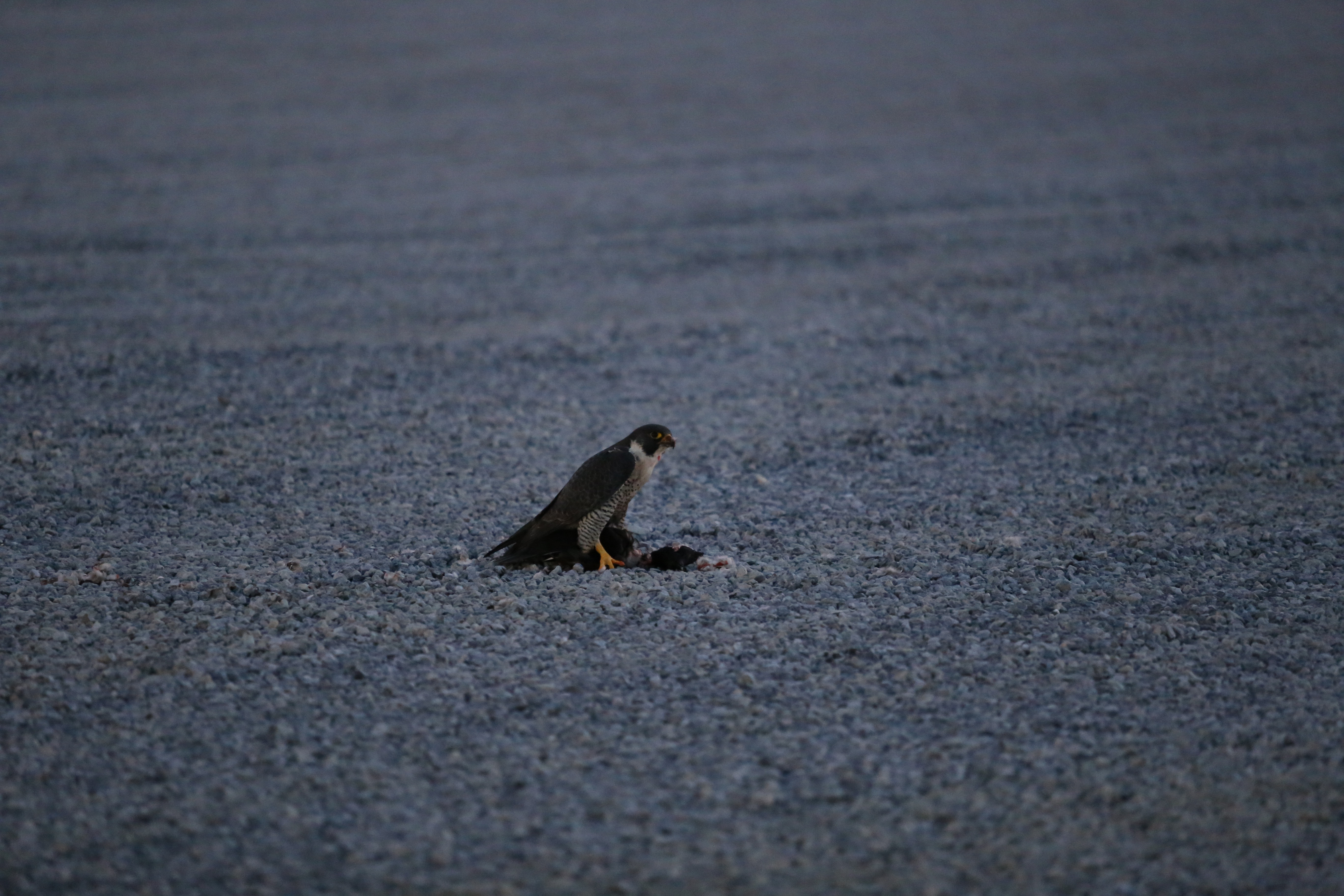
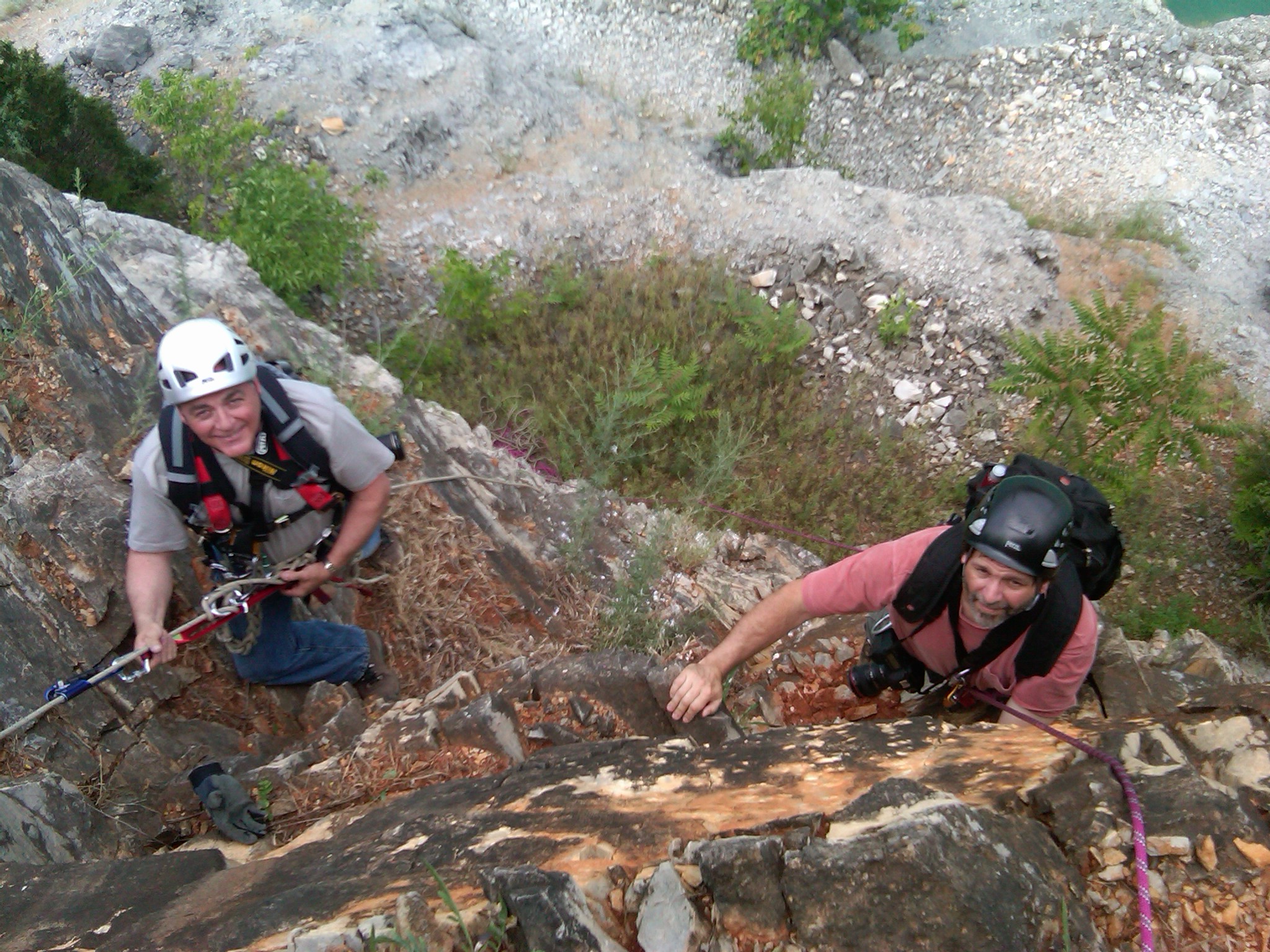
They hatched two chicks that year, but when Craig Koppie (from US Fish & Wildlife Services) and Bryan Watts, head of the CCB, roped into the nest to band the young they were gone. In 2011 the falcons’ behavior was difficult to interpret, but it appeared they had relocated to another part of the quarry and failed. Last year I was never able to visit, but Craig did once and found a new male (they stopped receiving signals from the original male last March, so he’s probably dead) and no female (though it’s likely she was around). So at this point we don’t really know what’s going on at the quarry. The bird shown in the photo I sent you has been seen there regularly, but until someone has a chance to spend some time at both places we won’t really know.
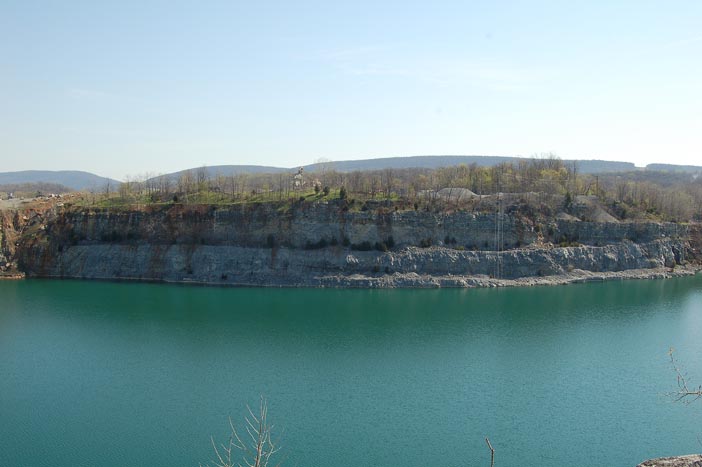
I do believe that the quarry birds frequented the park area and possibly hunted around there, so until we see both falcons together at MD Heights on a regular basis and displaying the type of behavior I described, I’m inclined to think one or both birds is just hanging out there. I hope not, because I’ve been longing to see peregrines reoccupy that cliff for most of my life, but we’ll see. There’s still hope; and if you saw two birds together there in January, then there’s a pretty good chance.”
 Follow