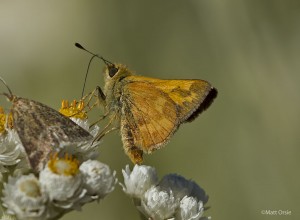
Leonard’s Skipper

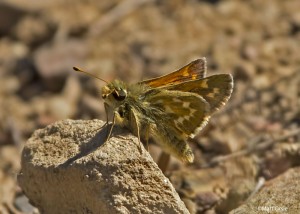
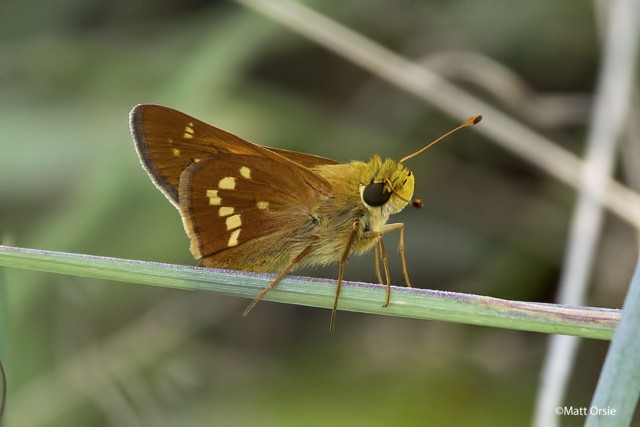
Just when you think the season is over comes the late summer brood of Leonard’s Skipper, a rare to uncommon species that hosts on Little Blue Stem grass. This grass is prevalent in some of the few remaining fragments of serpentine barrens that once covered much more area in the eastern U.S. The barrens look much like a prairie grassland with large sections of Virginia Pine mixed in. Soldiers Delight Natural Environment Area (NEA) is comprised of 1,900 acres of serpentine barren, the area has over 39 rare, threatened, or endangered plant species as well as rare insects, rocks and minerals. It is located near Owings Mills, MD. My wife and I joined a hardy group for a butterfly walk this afternoon in temps pushing 90 degrees. The tough conditions were worth the effort as a Leonard’s Skipper was located along the Choate Mine Trail. It seemed to me to have very recently emerged as it appeared to be “drying out”. This provided excellent looks and photo ops for all. This species is typically a fast mover and hard to get a photograph of, but not today!

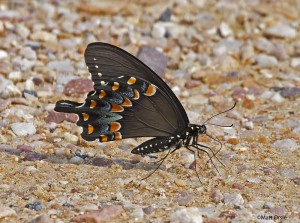
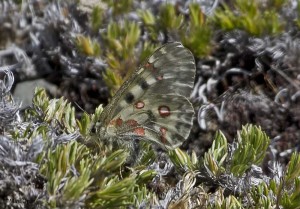
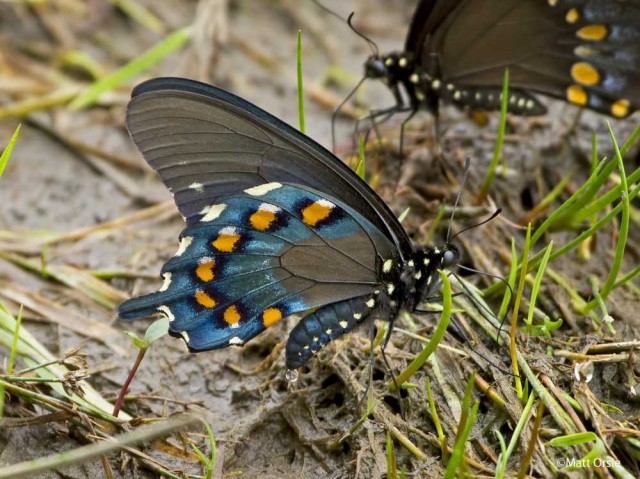
I’ve also included a ventral shot of a Pipevine Swallowtail taken near Babcock State Park, Fayette county, WV. (Click on images for a larger size) Hesperia leonardus - Leonard's SkipperBattus philenor - Pipevine Swallowtail
Posted in Remote Trip, Skippers, Swallowtails | Leave a comment

Summertime Blues

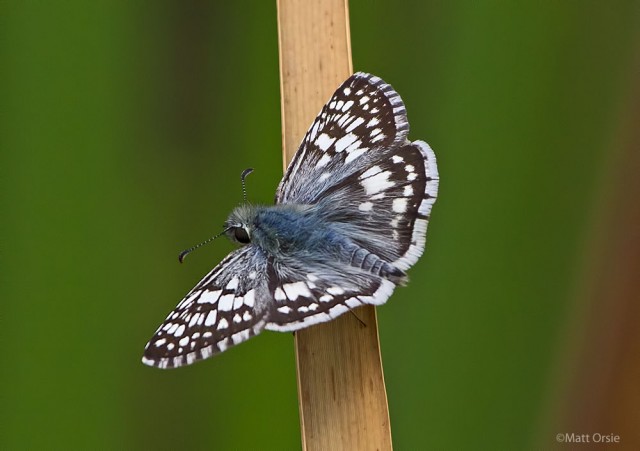
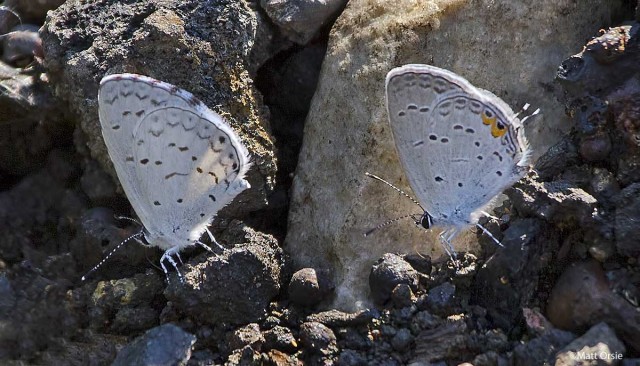
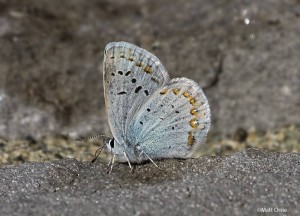
I recently visited Altona Marsh outside of Charles Town, WV were I came across my first Common Checkered-Skippers of the year. A couple of Viceroys were flying about and sulphur’s were puddling a lot. In with one of the puddle groups was a Summer Azure and an Eastern Tailed-Blue giving nice looks to compare and contrast.Pyrgus communis - Common Checkered-SkipperCelastrina neglecta - Summer Azure, Cupido comyntas - Eastern Tailed-Blue

Posted in Blues, Skippers | Leave a comment

Wild Indigo Duskywing

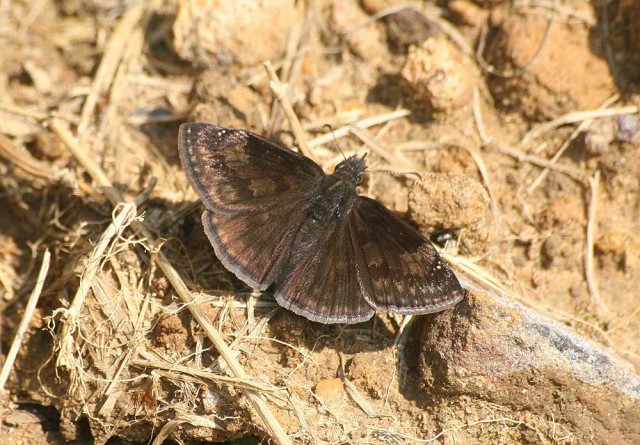
Gary Felton provides us with a Wild Indigo Duskywing this time. It occurs in three broods with gaps in between from late March through November. Closely resembles Horace’s Duskywing which is also flying now. Horace’s is larger and may be distinguished from Wild Indigo Duskywing by the lack of any hint of the paler brown forewing patch typical of the former. Also, in Horaces the dorsal forewing cell typically has a white spot which is absent in Wild Indigo.Erynnis baptisiae - Wild Indigo Duskywing

Posted in Butterfly ID, Duskywings | Leave a comment

Sleepy Orange

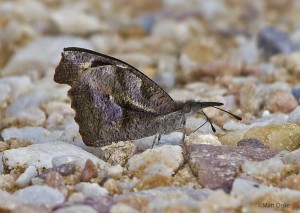
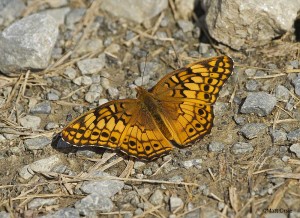
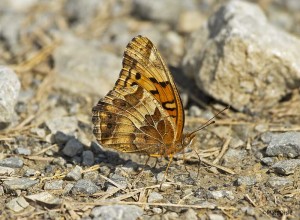
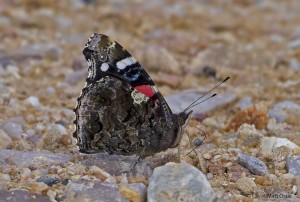
I found three Sleepy Oranges (lifer) at the parking lot of School House Ridge North battlefield at Harper’s Ferry. Most of the 21 species seen were within a couple hundred yards of the parking lot. Below are selected images of Sleepy Orange, Variegated Fritillary, American Snout and Red Admiral, which has been scare this year up until now.

I’ve heard of recent Red-banded Hairstreak reports in the eastern panhandle and regionally. This late summer brood seems to be in good numbers. I have not seen one yet this year… still hoping.

Also, I’ve found Black Swallowtail caterpillers on the Rue I planted near the house earlier this summer. (Click on images for larger size)

Abaeis nicippe - Sleepy Orange  Libytheana carinenta - American Snout
Euptoieta claudia - Variegated Fritillary  Euptoieta claudia - Variegated Fritillary
Papilio troilus - Spicebush Swallowtail Vanessa atalanta - Red Admiral
Posted in Brush-footed, Swallowtails, Whites and Sulphurs | Leave a comment

Olympic National Park

Every once an a while I.m going to post an out of the region report in the blog as they don’t happen very often. My wife and I spent one day last week in Olympic National Park located in the NW corner of Washington state. From the glacier capped peak of Mt. Olympus (el 7980… BTW, Zeus says “Hi”) to the west facing rain forest valleys that average about 150 inches of rain per year it’s one of the more spectacular places I’ve ever seen and we were there only 6 hrs and saw a very small portion!

The short time frame only allowed for us to visit a couple of locations to look for butterflies so of course I picked the high elevations. We “lep’d” the area around Hurricane Ridge and then out towards the end of Obstruction Point road. Most of the species encountered were lifers. The scenery was off the charts and the weather was stunning! In fact during our entire week spent on Vancouver Island, British Columbia the weather was stunning. Now is the dry season in that area. Victoria, BC has not seen any rain since June. The fields were brown and the butterflies were few…. So, on a day in Victoria when I was running along the shoreline of the Strait of Juan de Fuca I glanced to my right and saw Mt. Olympus about 30 miles away. I thought to myself “Snow = water, water = wildflowers and green vegetation”. Thus, we took the trip to the high mountain meadows and melting snow fields in Olympic. BTW, the wildflowers were resplendent in a myriad of colors. We didn’t go to any lower elevation locations so that will be a good excuse to go back.

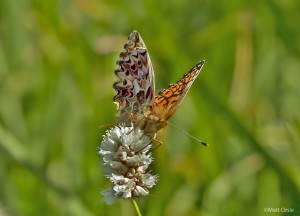
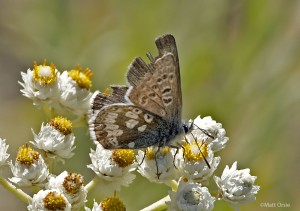
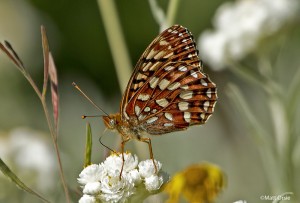
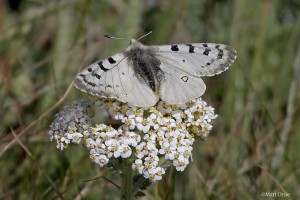
The following photos were all lifers and represent some of the high elevation specialties found in Washington. In fact a couple are uncommon; Common Branded Skipper (never trust the word “common” in anything) and Vidler’s Alpine (very restricted in its range). We spent the entire time between 5,200 and 6,400 ft. I am indebted to Caitlin LaBar and Jonathon Pelham for confirmation and corrections/clarification on a few of the species I had called wrong. Caitlan has a wonderful blog site at: Northwest Butterflies. You should check it out. Hovering your mouse over the image will identify the species. My personal highlight was seeing my first Parnassian of any kind, in this case Rocky Mountain Parnassian. (As always you can click on an image for the larger size)

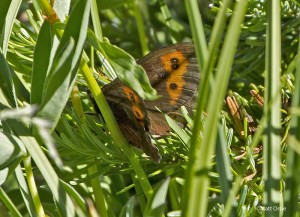
 Plebejus anna - Anna's Blue  Erebia vidleri - Vidler's Alpine
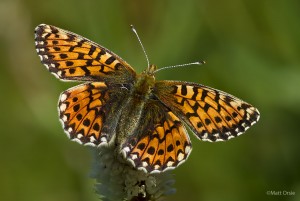
 Boloria chariclea - Arctic Fritillary  Boloria chariclea - Arctic Fritillary
 Hesperia comma - Common Branded Skipper  Plebejus glandon - Arctic Blue
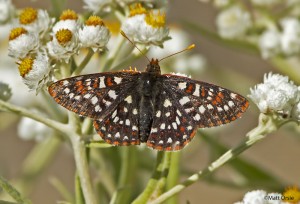
 Euphydryas colon - Snowberry/Colon Checkerspot  Ochlodes sylvanoides - Woodland Skipper
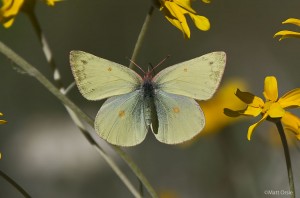
 Speyeria hydaspe - Hydaspe Fritillary  Colias occidentalis - Western Sulphur (female)
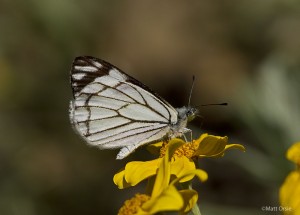
 Neophasia menapia - Pine White  Parnassius smintheus - Rocky Mountain Parnassian
 Parnassius smintheus - Rocky Mountain Parnassian
Posted in Blues, Brush-footed, Remote Trip, Skippers, Swallowtails, Uncategorized, Whites and Sulphurs | 1 Comment